
Why Learn Django for Beginners in 2026?
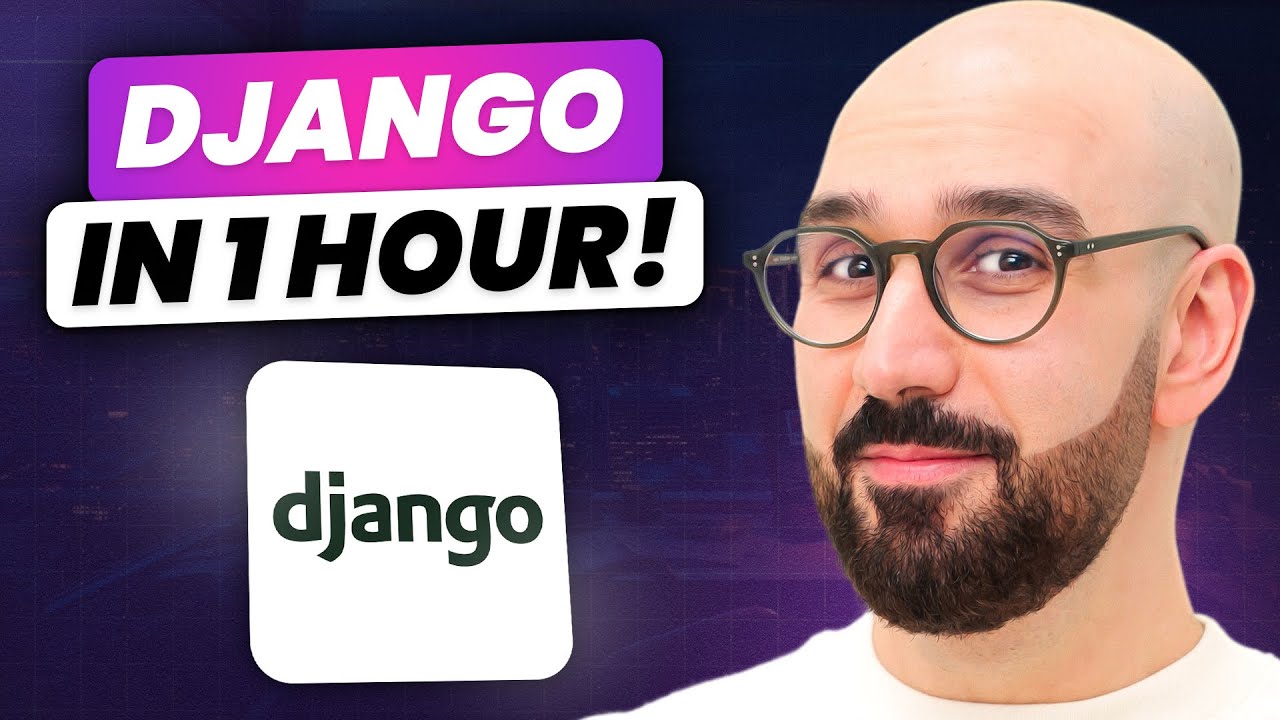
Django Tutorial for Beginners – Build Powerful Backends
Take this course on CourseBond — completely free to start.
If you are looking to break into web development, Python is likely the first language you hear about. It is readable, versatile, and has a massive community. But knowing Python alone isn’t enough to build a full website. You need a framework that handles the heavy lifting—user authentication, database connections, URL routing, and security. That is where Django comes in.
In 2026, Django remains one of the most practical choices for beginners. Why? Because it follows a “batteries-included” philosophy. Unlike other frameworks that force you to piece together libraries for common tasks, Django gives you everything out of the box. You get an admin panel, an ORM (Object-Relational Mapper) for databases, built-in security against SQL injection and XSS attacks, and a templating engine—all without installing extra packages.
The job market for Django developers continues to grow. Startups, media companies, and even large enterprises use Django for rapid development. Instagram, Pinterest, and Mozilla all rely on Django for their backends. Learning it as a beginner gives you a skill that is immediately marketable.
Another reason 2026 is a great time to start: the ecosystem around Django has matured. There are more learning resources, better documentation, and simpler deployment tools. You no longer need to be a DevOps expert to put your Django app online. Platforms like PythonAnywhere, Render, and Railway make deployment straightforward for beginners.
Finally, Django teaches you good habits. It encourages a clean project structure, separates concerns (models, views, templates), and enforces security best practices. When you learn Django as your first backend framework, you are not just learning a tool—you are learning how professional web applications are built.
Who Should Learn Django for Beginners?
This guide is for anyone who has a basic understanding of Python and wants to build real web applications. You do not need to be a Python expert—knowing variables, functions, loops, and basic object-oriented programming is enough.
Specifically, this is for you if:
- You are a complete beginner to web development. You have written some Python scripts but never built a website. Django’s clear structure will help you understand how the internet works under the hood.
- You are a frontend developer wanting to go full-stack. If you already know HTML, CSS, and JavaScript, adding Django to your toolkit lets you build the backend logic that powers your frontend.
- You are a data analyst or data scientist. You use Python daily for data work, but you want to present your insights as a web app. Django makes it easy to create dashboards and data-driven applications.
- You are a student or career changer. You want a structured, project-based way to learn backend development. Django’s large community means you will find answers to almost any question you have.
If you fall into any of these categories, you are in the right place. The key is to have Python installed on your computer and a willingness to type code, not just copy-paste it.
The Best Free Way to Learn Django for Beginners
The internet is full of Django tutorials, but many are outdated, too fast, or assume prior web development experience. For a beginner, the best free path is a structured course that builds a real project step by step.
That is exactly what you get in the Django Tutorial for Beginners – Build Powerful Backends course on CourseBond. This course is designed for absolute beginners. It starts with installing Django and creating your first virtual environment, then moves through models, views, templates, and URLs. You will build a working web application by the end of the course, not just follow along with abstract examples.
What makes this course stand out?
- No fluff. Every video and code snippet serves a purpose. You won’t waste time on irrelevant theory.
- Project-based learning. You build a real backend that handles user data, forms, and database queries.
- Free and accessible. CourseBond is a free online learning marketplace. You can access the entire course without paying a dime.
- Updated for Django 5.x. The course uses the latest stable version, so you won’t learn deprecated techniques.
If you prefer learning by doing, this course is your best starting point. It eliminates the confusion of choosing what to learn next and gives you a clear path forward.
Django for Beginners Roadmap: From Beginner to Confident Practitioner
Learning Django is a journey. Here is a step-by-step roadmap that mirrors what you will find in the Django Tutorial for Beginners – Build Powerful Backends course. Follow these stages, and you will go from zero to building your own web apps.
Stage 1: Environment Setup and First Project
Before writing any code, you need to set up a Python virtual environment. This isolates your project’s dependencies so they don’t conflict with other projects. Install Django using pip, then create your first project with the django-admin startproject command. Run the development server and see the default Django welcome page. This is your first victory.
Stage 2: Understanding the MVC (Model-View-Template) Pattern
Django follows a variant of MVC called MVT (Model-View-Template). The Model handles data and database logic. The View handles business logic and decides what data to send. The Template handles how that data is displayed as HTML. Spend time understanding how these three pieces interact. A common beginner mistake is to write all logic in views—learn to separate concerns early.
Stage 3: Building Your First App
Django projects are made of multiple apps. An app is a self-contained module that does one thing (e.g., a blog app, a user profile app). Use python manage.py startapp to create your first app. Register it in the project’s settings.py file. Then create a simple view that returns “Hello, world!” and map it to a URL. This is your first functional webpage.
Stage 4: Working with Models and Databases
Models are Python classes that define your data structure. Each model maps to a database table. You will define fields like CharField, IntegerField, and DateTimeField. After defining models, run makemigrations and migrate to create the actual database tables. Then use Django’s built-in admin interface to add and edit data without writing any frontend code.
Stage 5: Creating Dynamic Templates
Templates are HTML files with Django template tags. You will learn to pass data from views to templates, use {% for %} loops to display lists of items, and {% if %} statements for conditional logic. Template inheritance is a powerful feature—create a base template with your site layout, then extend it in child templates.
Stage 6: Handling User Input with Forms
Forms are how users interact with your backend. Django provides a forms module that automatically generates HTML form fields and validates user input. You will create a form that saves data to your database, handles errors, and shows success messages. This is where your app starts to feel interactive.
Stage 7: Authentication and User Management
Most web apps need user accounts. Django comes with a built-in authentication system. You will learn to create login, logout, and registration pages. You will also protect certain views so only logged-in users can access them. This is a critical skill for any real-world project.
Stage 8: Deployment
Your app is not complete until it is live on the internet. You will learn to collect static files, configure a production database (like PostgreSQL), and deploy to a free platform like PythonAnywhere or Render. The course guides you through these steps so you can share your project with friends or potential employers.
Common Mistakes Beginners Make
Even with a great course, beginners often fall into the same traps. Here are the most common mistakes and how to avoid them.
- Skipping the virtual environment. Installing Django globally might work at first, but it will cause version conflicts later. Always create and activate a virtual environment before starting a project.
- Copy-pasting code without understanding it. It is tempting to copy code from Stack Overflow. Instead, type it yourself and read the Django documentation for each function you use. Understanding comes from typing and breaking things.
- Ignoring the admin panel. Django’s admin is a powerful tool for testing your models. Beginners often skip it, but it is the fastest way to see if your data structure works.
- Writing all logic in views. Views should be thin. Move business logic to models or helper functions. This keeps your code clean and testable.
- Forgetting to run migrations. You can change your models all day, but if you don’t run
makemigrationsandmigrate, the database won’t reflect those changes. This is the most common cause of “why isn’t my data showing?” errors. - Hardcoding URLs and settings. Use
{% url %}template tags instead of hardcoding paths. Store secret keys and database passwords in environment variables, not in your code. - Giving up too early. Django has a learning curve. The first time you see a 404 error or a database migration conflict, it is easy to feel overwhelmed. Take a break, read the error message carefully, and search for solutions. Every error is a learning opportunity.
How to Stay Motivated and Finish the Course
Learning a new framework takes time. Here are practical tips to keep going until you finish the Django Tutorial for Beginners – Build Powerful Backends course.
- Set a regular schedule. Even 20 minutes a day is better than a 3-hour session once a week. Consistency builds momentum.
- Build alongside the course. Do not just watch the videos. Pause, type the code, and run it. If you make a typo, fix it. That is where real learning happens.
- Keep a “bug journal.” When you encounter an error, write down what you tried and how you fixed it. This becomes your personal reference guide and boosts your confidence.
- Join a community. The Django community is welcoming. Join the Django subreddit, the Django Discord server, or the CourseBond discussion forums. Ask questions when you are stuck. Helping others also reinforces your own knowledge.
- Celebrate small wins. Got your first view to display? Deployed your first app? That is a big deal. Acknowledge your progress. Share your project with a friend or on social media.
- Remember your “why.” Are you learning Django to get a job, build a side project, or automate something at work? Write that reason down and put it near your computer. When motivation dips, read it again.
Frequently Asked Questions
Do I need to know HTML and CSS before learning Django?
It helps, but it is not strictly required. Django templates use HTML, so basic knowledge of HTML tags is useful. CSS is for styling, which you can learn later. The course focuses on the backend logic, so you can use minimal HTML to get started.
How long does it take to learn Django as a beginner?
If you dedicate 1-2 hours per day, you can go from zero to building a basic web app in 2-4 weeks. The Django Tutorial for Beginners – Build Powerful Backends course is designed to be completed in about 10-15 hours of active learning.
Can I learn Django without learning Python first?
Technically, you could, but it would be frustrating. Django is written in Python, and you will need to understand Python syntax, functions, and classes. Spend at least a week learning Python basics before diving into Django.
Is Django still relevant in 2026 with so many new frameworks?
Absolutely. Django is mature, stable, and widely used. While newer frameworks like FastAPI are great for APIs, Django remains the best choice for full-stack web applications that need an admin panel, user authentication, and a database. It is not going anywhere.
What is the difference between Django and Flask?
Flask is a micro-framework—it gives you the bare minimum to build a web app. You must choose your own database library, authentication system, and templates. Django gives you all of that built-in. For beginners, Django is easier because you do not have to make dozens of decisions before you start coding.
Can I get a job after completing this course?
Yes, but you will need to build a portfolio. After finishing the course, build 2-3 more projects on your own, such as a blog, a to-do app, or a simple e-commerce site. Contribute to open-source Django projects. Employers look for practical experience, not just course completion.
Ready to Start Learning?
You have read the roadmap, you know what mistakes to avoid, and you have strategies to stay motivated. The only thing left is to take action. The best time to start was yesterday. The second best time is now.
Head over to CourseBond and begin the Enroll in Django Tutorial for Beginners – Build Powerful Backends (free). The course is completely free, structured for beginners, and will have you building real backends in no time. No credit card required, no hidden fees—just solid, practical Django education.
Open your terminal, create a virtual environment, and write your first Django command today. You have everything you need. Go build something awesome.
