
Why Learn Java for Beginners in 2026?
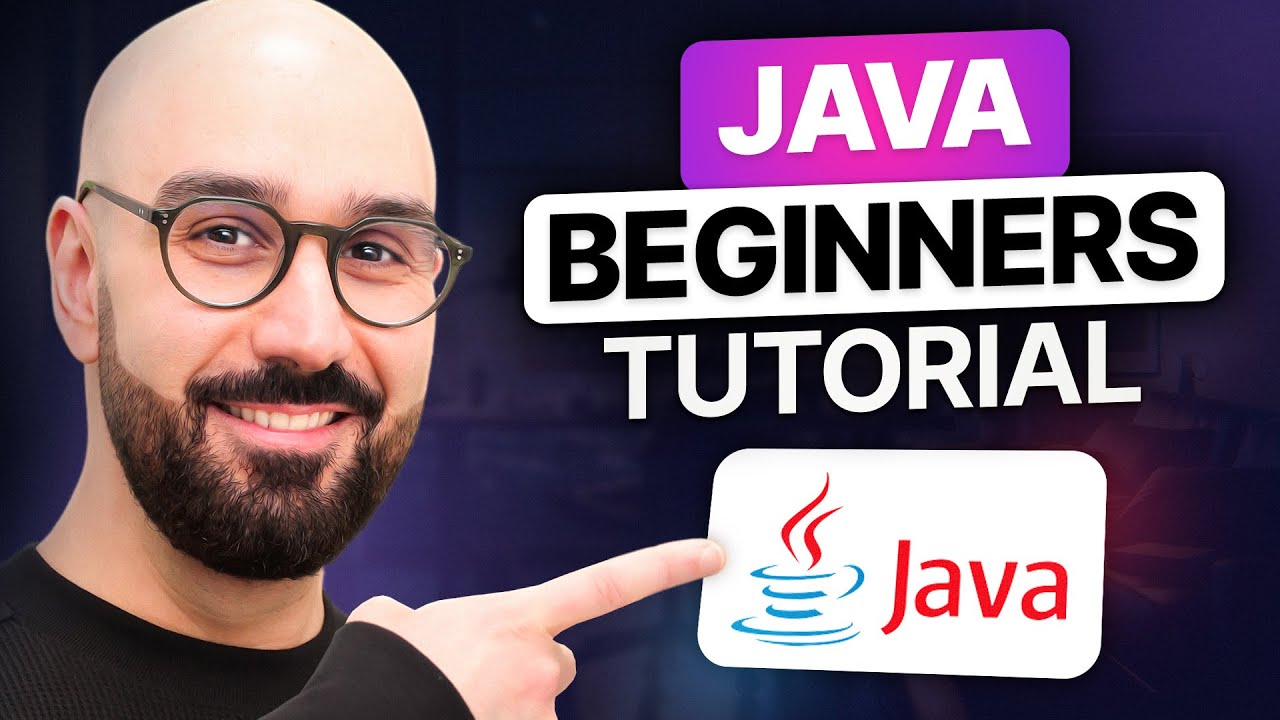
Java Full Course for Beginners
Take this course on CourseBond — completely free to start.
Java has been a cornerstone of the programming world for decades, and it’s not fading away. If you are considering your first programming language, Java remains an excellent choice. Many people assume older languages are obsolete, but Java powers millions of applications, from Android apps to large-scale enterprise systems. In 2026, the demand for Java developers is still strong because companies rely on its stability, security, and scalability.
Learning Java gives you a solid foundation in object-oriented programming, which is a core concept used in many modern languages. Once you understand Java, picking up languages like C#, Python, or Kotlin becomes much easier. The syntax is strict, which might feel challenging at first, but it teaches you discipline and good habits. You will learn how to write code that is organized, reusable, and maintainable.
Another reason to choose Java in 2026 is the massive community support. Whatever problem you face, someone has already solved it and posted a solution online. There are countless libraries, frameworks, and tools built around Java, making it a practical language for building real-world projects. Plus, Java is free to use. You don’t need to pay for any licenses to start coding. This makes it an accessible entry point for anyone with a computer and an internet connection.
Finally, Java opens doors to various career paths. You could become a backend developer, Android developer, data engineer, or even work with big data technologies like Apache Hadoop and Spark. The skills you gain from learning Java are transferable and highly valued in the tech industry. If you are looking for a language that offers both longevity and opportunity, Java is a smart bet.
Who Should Learn Java for Beginners?
The short answer is: anyone who wants to learn programming. But let’s break it down a little. Java is a great fit for several specific groups of people.
Complete beginners with no coding experience. If you have never written a line of code, Java is a wonderful starting point. The language forces you to understand fundamental concepts like variables, loops, and classes. Unlike some languages that let you skip these basics, Java requires you to learn them properly. This builds a strong foundation for your future in programming.
Students and career changers. Many universities teach Java in introductory computer science courses. If you are studying or planning to study computer science, getting a head start with Java will make your coursework easier. Similarly, if you are working in a different field and want to switch to tech, Java is a reliable skill that employers actively seek.
Self-taught learners who want structure. Learning to code on your own can be overwhelming because there are so many resources. Java provides a clear path. You start with basic syntax, move to object-oriented programming, and then explore advanced topics like collections and exception handling. The structure of Java itself mirrors a logical learning curve.
Anyone interested in Android development. While Kotlin is now the preferred language for Android, Java is still widely used in the Android ecosystem. Many older apps are written in Java, and understanding Java gives you the ability to maintain and update them. Learning Java first can also make learning Kotlin easier later.
No matter your background, if you are curious about how software works and want to build your own applications, Java for beginners is a perfect starting point. The key is to have patience and a willingness to practice consistently.
The Best Free Way to Learn Java for Beginners
There are countless resources for learning Java, but not all of them are beginner-friendly or free. The best approach combines a structured course with hands-on practice. This is where CourseBond comes in. The Java Full Course for Beginners on CourseBond is designed specifically for people who are new to programming. It takes you step by step from installation to building your first projects.
Why is this course the best free option? First, it is completely free. You do not need to worry about hidden fees or limited trial periods. You get access to the entire curriculum from day one. Second, the course is structured logically. It starts with the absolute basics, like setting up your development environment and writing a simple “Hello World” program. Then it gradually introduces more complex topics like loops, arrays, and object-oriented concepts.
The course also includes practical exercises and projects. You will not just watch videos; you will write code. This hands-on experience is crucial for retaining what you learn. Many free tutorials only cover theory, but the Java Full Course for Beginners emphasizes building real applications. You will create small programs that reinforce each concept.
Another advantage is the pacing. The course is broken into manageable sections, so you can learn at your own speed. Whether you have one hour a day or only weekends, you can progress steadily. The instructor explains concepts in plain English, avoiding unnecessary jargon. If you get stuck, the CourseBond community and Q&A sections are there to help.
To get the most out of this free resource, follow along actively. Do not just watch the videos. Pause, write the code yourself, and experiment. Try to break things and fix them. That is how you truly learn. Combine the course with a good code editor like IntelliJ IDEA Community Edition or VS Code with the Java extension pack. With the right tools and the Java Full Course for Beginners, you have everything you need to start your journey.
Java for Beginners Roadmap: From Beginner to Confident Practitioner
Learning Java is a journey, and having a roadmap helps you stay on track. Below is a step-by-step guide that takes you from absolute beginner to someone who can write meaningful Java programs on their own.
Step 1: Set Up Your Environment
Before you write any code, you need the right tools. Install the Java Development Kit (JDK) from the official Oracle website or use OpenJDK. Then, choose an Integrated Development Environment (IDE). IntelliJ IDEA Community Edition is a popular choice for Java beginners. It is free and has features that help you write code faster. Alternatively, you can use VS Code with the Java Extension Pack. Spend some time getting familiar with your IDE. Learn how to create a new project, run your code, and find error messages.
Step 2: Learn the Basics
Start with the fundamentals. Understand what variables are and how to use different data types like int, double, boolean, and String. Learn how to write simple expressions and use operators. Then, move on to control flow. Practice using if-else statements, switch cases, and loops (for, while, do-while). These are the building blocks of any program. Write small programs that ask for user input and print output. For example, create a calculator that adds two numbers or a program that checks if a number is even or odd.
Step 3: Dive into Object-Oriented Programming (OOP)
Java is an object-oriented language, so understanding OOP is essential. Learn about classes and objects. Understand what a constructor is and how to create methods. Then, explore the four pillars of OOP: encapsulation, inheritance, polymorphism, and abstraction. This might feel abstract at first, but it becomes clearer with practice. Create simple classes like “Car” or “Student” with attributes and methods. Build small programs that use multiple classes working together. The Java Full Course for Beginners covers these topics in detail with clear examples.
Step 4: Work with Arrays and Collections
Once you are comfortable with OOP, learn how to store multiple values. Start with arrays. Understand how to declare, initialize, and loop through arrays. Then, move to the Collections Framework. Learn about ArrayList, HashMap, and HashSet. These are powerful tools that make managing data much easier. Practice by creating a program that stores a list of names and allows you to search for a specific name.
Step 5: Handle Errors Gracefully
Bugs are inevitable. Learning how to handle them is a sign of a mature programmer. Study exception handling using try-catch blocks. Understand the difference between checked and unchecked exceptions. Learn how to use the finally block. Also, get comfortable reading stack traces. They tell you exactly where your code went wrong. Write programs that intentionally cause errors and then handle them properly.
Step 6: Explore File I/O and Basic APIs
Now, learn how to read from and write to files. This is a practical skill for many applications. Understand how to use classes like FileReader, BufferedReader, FileWriter, and BufferedWriter. Then, explore some built-in Java APIs. For example, learn how to work with dates using the LocalDate and LocalTime classes. Understand how to use the Math class for common mathematical operations.
Step 7: Build a Small Project
Finally, put everything together. Build a simple project like a to-do list application, a library management system, or a quiz game. This is where you will truly solidify your skills. The project should use classes, collections, file I/O, and exception handling. Do not worry if it is not perfect. The goal is to practice the complete workflow from planning to execution. The Java Full Course for Beginners includes project-based lessons that guide you through this process.
Common Mistakes Beginners Make
Every beginner makes mistakes. That is part of learning. But being aware of the most common pitfalls can save you time and frustration. Here are the top mistakes Java beginners make and how to avoid them.
1. Skipping the basics. Many beginners rush through fundamental concepts like data types and loops because they seem boring. But these are the foundation of everything else. If you do not fully understand how a loop works, you will struggle with more complex topics later. Take your time with the basics. Write plenty of small programs that use them.
2. Ignoring the error messages. When your code fails, the compiler or runtime gives you an error message. Beginners often panic and ignore these messages. Instead, read them carefully. They tell you exactly what went wrong and often which line of code caused the problem. Learning to read error messages is a superpower.
3. Not practicing enough. Watching tutorials is not enough. You must write code yourself. It is easy to feel like you understand a concept when you watch someone else do it, but the real test is when you have to write it from scratch. Aim to write code every day, even if it is just for 15 minutes.
4. Trying to memorize everything. You do not need to memorize every method or syntax. Programming is about problem-solving, not rote memory. Learn the core concepts and understand where to look up details. Use Google, documentation, and forums like Stack Overflow. Knowing how to find answers is more important than memorizing them.
5. Copy-pasting code without understanding. It is tempting to copy code from tutorials or forums, but this hampers your learning. If you copy code, take the time to type it out manually and understand each line. Change variables, add comments, and experiment. Make sure you could explain the code to someone else.
6. Neglecting to use an IDE effectively. Beginners sometimes write code in a simple text editor and compile it manually. While this is possible, it is inefficient. Learn to use your IDE’s features, like auto-completion, debugging, and refactoring tools. These features save time and help you catch errors early. The Java Full Course for Beginners shows you how to set up and use IntelliJ IDEA effectively.
How to Stay Motivated and Finish the Course
Learning a programming language takes time. It is normal to feel frustrated or overwhelmed. The key is to build habits that keep you going. Here are practical strategies to stay motivated and complete the Java Full Course for Beginners.
Set a consistent schedule. Decide how much time you can realistically dedicate each day or week. Even 30 minutes a day is better than a five-hour session once a month. Consistency helps concepts stick. Put your learning time on your calendar and treat it like an appointment you cannot miss.
Break down the course into milestones. Do not think about finishing the entire course at once. Instead, break it into smaller goals. For example, “This week, I will complete the section on loops and arrays.” Celebrate when you achieve each milestone. This gives you a sense of progress.
Join a community. Learning alone can be lonely. Join forums, Discord servers, or local meetups for Java learners. The CourseBond community is a great place to ask questions and share your progress. Explaining concepts to others also reinforces your own understanding.
Build something you care about. At some point, start a small project that interests you personally. It could be a program that helps you organize your music collection or a simple game. When you are working on something you care about, learning becomes fun rather than a chore.
Take breaks and be kind to yourself. If you get stuck on a problem, walk away for a while. Your brain continues to work on it in the background. Come back later with fresh eyes. Do not compare your progress to others. Everyone learns at a different pace. Focus on your own journey.
Remember, every expert was once a beginner. The fact that you are reading this guide means you have already taken the first step. Keep going. The Java Full Course for Beginners is designed to support you through the entire process, so use it as your main resource.
Frequently Asked Questions
Is Java too difficult for a complete beginner?
Java has a reputation for being verbose, but it is not too difficult for a beginner. The strict syntax actually helps you learn good habits. Many beginners start with Java and succeed. The key is to take it step by step and practice regularly. The Java Full Course for Beginners is designed with absolute beginners in mind, so you will be guided through every concept.
How long does it take to learn Java for beginners?
This depends on your dedication and background. If you study consistently for 1-2 hours a day, you can expect to grasp the basics in about 4-6 weeks. Becoming comfortable with object-oriented programming and building small projects might take 2-3 months. Mastery takes much longer, but you will be able to write useful programs within a few months of consistent effort.
Do I need a powerful computer to run Java?
No. Java runs on almost any modern computer, including low-end laptops. The JDK and IDEs like IntelliJ IDEA Community Edition are free and work on Windows, macOS, and Linux. You do not need expensive hardware to learn Java. A basic computer with at least 4GB of RAM is sufficient.
What is the difference between Java and JavaScript?
This is a common confusion. Despite the similar name, Java and JavaScript are completely different languages. Java is a compiled, statically-typed language often used for backend development and Android apps. JavaScript is an interpreted, dynamically-typed language primarily used for web development (making websites interactive). Do not confuse them. Learning Java will not directly teach you JavaScript, but the logical thinking skills transfer.
Can I get a job after learning Java for beginners?
Learning the basics is the first step toward a job, but you will need to go beyond beginner level. After completing the Java Full Course for Beginners, you should build a portfolio of projects, learn popular frameworks like Spring Boot, and practice coding interview questions. Many entry-level Java developer positions require knowledge of databases, version control (Git), and basic web development. Use your beginner knowledge as a springboard to learn these additional skills.
What should I do if I get stuck on a concept?
First, try to solve the problem on your own for a reasonable amount of time. Search for the error message or concept online. If you are still stuck, ask for help in the CourseBond community or on forums like Stack Overflow. Be specific about what you tried and what the error is. Sometimes, taking a short break and coming back with fresh eyes is all you need.
Ready to Start Learning?
You now have a clear roadmap, an understanding of common mistakes, and strategies to stay motivated. The only thing left is to take action. Java is a powerful, rewarding language that can open many doors in your career and personal projects. You do not need to wait for the perfect moment. Start today, even if you only have 20 minutes.
The best place to begin is with a structured, free resource that holds your hand through the entire journey. The Java Full Course for Beginners on CourseBond is exactly that. It is comprehensive, beginner-friendly, and completely free. No hidden costs, no sign-up fees. Just pure learning.
Click the link below to enroll and write your first line of Java code today. Your future self will thank you.
Enroll in Java Full Course for Beginners (free)
