
Why Learn C Programming in 2026?
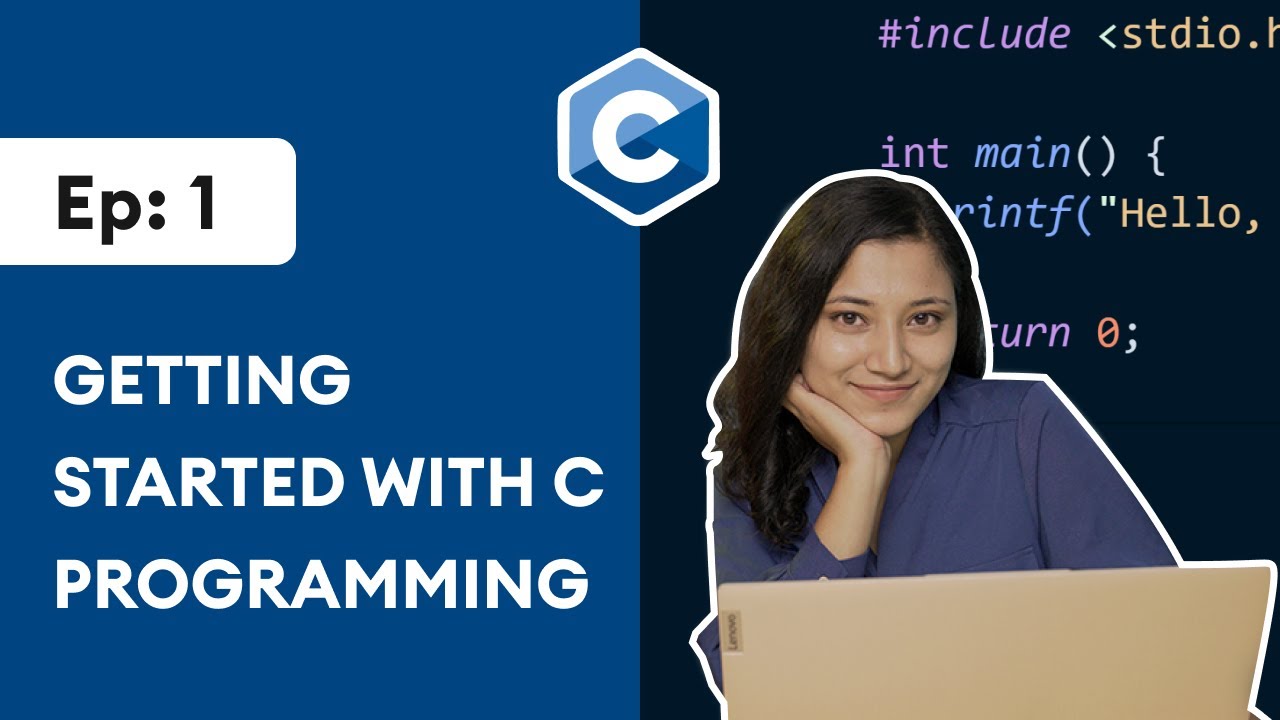
C Programming for Beginners
Take this course on CourseBond — completely free to start.
You might be thinking, “C? Isn’t that an old language? Why should I learn it in 2026 when there are so many newer, shinier options out there?” That’s a fair question, and the answer is simple: C is the bedrock of modern computing. It’s like learning Latin for a doctor; it gives you a fundamental understanding that makes everything else easier.
Here’s why C remains incredibly relevant and valuable:
- Understanding the “Under the Hood”: C provides a unique window into how computers actually work. You’ll learn about memory management, pointers, and direct hardware interaction – concepts often abstracted away in higher-level languages. This deep understanding makes you a better programmer, regardless of the language you end up specializing in.
- Performance Powerhouse: C is renowned for its speed and efficiency. It’s the language of choice for operating systems (like Linux and Windows), embedded systems, game engines, and performance-critical applications where every millisecond counts. If you want to build fast software, C is your ally.
- Foundation for Other Languages: Many popular languages like C++, Java, C#, Python, and JavaScript have syntax and concepts directly borrowed or inspired by C. Learning C first makes picking up these other languages significantly easier and faster. It’s the ultimate stepping stone.
- System Programming: If you’re interested in developing operating systems, drivers, compilers, or other low-level software, C is indispensable. It gives you the control and access needed for these complex tasks.
- Embedded Systems and IoT: With the explosion of the Internet of Things (IoT) and embedded devices (think smart appliances, wearables, industrial controls), C is more relevant than ever. These devices often have limited resources, making C’s efficiency crucial.
- Problem-Solving Skills: C forces you to think algorithmically and solve problems at a fundamental level. This rigorous approach sharpens your logical thinking and problem-solving abilities, skills that are transferable to any programming challenge.
- Career Opportunities: Despite its age, C skills are still highly sought after in specific niches, especially in system programming, embedded development, and high-performance computing. Mastering C can open doors to specialized and well-paying roles.
So, while C might not be the flashiest language on the block, it offers an unparalleled educational return on investment. It’s not just about learning a language; it’s about gaining a foundational understanding of computing that will serve you throughout your entire career.
Who Should Learn C Programming?
C programming isn’t for everyone, but it’s incredibly beneficial for a specific set of learners and career paths. If any of these describe you, then diving into C might be one of the best decisions you make:
- Aspiring Software Engineers: If you’re serious about a career in software development and want a strong, fundamental understanding of how software interacts with hardware, C is a must. It builds a robust mental model for computation.
- Computer Science Students: C is often the first language taught in computer science programs because of its foundational nature. Learning it early will give you a significant advantage in your studies.
- Those Interested in Operating Systems and System Programming: If the idea of building an operating system, device drivers, or compilers excites you, C is the primary language you’ll need to master.
- Embedded Systems and IoT Developers: For anyone looking to work with microcontrollers, sensors, and the vast world of embedded devices, C is the language of choice due to its efficiency and direct hardware control.
- Game Developers (especially low-level engines): While many games are developed in C++ or scripting languages, the core engines often have C components. A strong C background is invaluable for understanding how these engines work and optimizing performance.
- Individuals Who Want to Understand “How Things Work”: If you’re curious about the inner workings of computers and want to peel back the layers of abstraction, C provides that direct access.
- Programmers Looking to Deepen Their Understanding: Even if you already program in other languages, learning C can significantly enhance your understanding of memory management, data structures, and algorithms, making you a more effective programmer overall.
- Anyone Seeking a Strong Problem-Solving Foundation: C’s directness forces you to think through problems logically and methodically, honing your algorithmic thinking and general problem-solving skills.
If you’re someone who prefers immediate visual results or wants to build web applications without diving deep into system architecture, C might feel a bit abstract at first. However, for those who want to build a truly robust and versatile programming foundation, C is an unparalleled choice.
The Best Free Way to Learn C Programming
Learning C programming doesn’t have to break the bank. In fact, there are fantastic free resources available that can take you from a complete novice to someone confident in writing C code. The key is finding a structured, comprehensive, and engaging resource that keeps you motivated.
One of the absolute best ways to learn C programming for free is through a well-designed online course. This is where CourseBond shines. We specifically recommend the C Programming for Beginners course.
Here’s why a structured course like this is ideal, especially when it’s free:
- Structured Learning Path: A good course breaks down complex topics into manageable, logical steps. It guides you from the absolute basics (like setting up your environment) to more advanced concepts (like pointers and data structures) in a clear progression. This prevents you from getting lost or overwhelmed.
- Video Lectures: For many learners, watching an instructor explain concepts and demonstrate code is far more effective than just reading text. Visual and auditory learning can significantly enhance understanding.
- Practical Examples and Exercises: Theory is important, but programming is a hands-on skill. A quality course will include numerous code examples and practical exercises that allow you to apply what you’ve learned immediately. This reinforces concepts and builds confidence. The C Programming for Beginners course emphasizes practical application.
- Quizzes and Assessments: These help you gauge your understanding and identify areas where you might need to review. They’re excellent tools for self-assessment.
- Community and Support (often): While the CourseBond course is self-paced, many online learning platforms offer forums or discussion sections where you can ask questions and interact with other learners.
- Accessibility: Free online courses remove financial barriers, making quality education accessible to anyone with an internet connection.
What to Look for in a Free C Programming Course:
- Beginner-Friendly: It should assume no prior programming knowledge.
- Comprehensive: Covers core C concepts thoroughly.
- Practical: Includes plenty of coding examples and exercises.
- Clear Explanations: The instructor should be easy to understand.
- Up-to-Date: While C itself doesn’t change rapidly, good practices and tools evolve.
The C Programming for Beginners course on CourseBond ticks all these boxes, providing a robust and accessible pathway to mastering C. It’s designed specifically to get you coding efficiently and understanding the core principles without any cost.
Beyond a structured course, consider supplementing your learning with:
- Online Documentation & Tutorials: Websites like GeeksforGeeks, Tutorialspoint, and W3Schools offer excellent reference material.
- YouTube Channels: Many educators provide free video tutorials on specific C topics.
- Practice Platforms: Websites like HackerRank, LeetCode, and CodeWars offer coding challenges to sharpen your skills.
By combining a strong foundational course like the one on CourseBond with these supplementary resources, you’ll be well on your way to becoming a proficient C programmer without spending a dime.
C Programming Roadmap: From Beginner to Confident Practitioner
Learning C is a journey, not a sprint. Having a clear roadmap will help you navigate the complexities and build your skills systematically. Here’s a suggested path to take you from a complete beginner to a confident C programmer:
Phase 1: The Absolute Basics (Weeks 1-3)
- Setting Up Your Environment: Learn how to install a C compiler (like GCC) and a text editor or IDE (like VS Code, Code::Blocks, or Dev-C++). Understand the compilation and execution process.
- Your First Program: “Hello, World!”: Understand the basic structure of a C program,
#include,main()function,printf(). - Variables and Data Types: Learn about integers (
int), floating-point numbers (float,double), characters (char), and how to declare and initialize them. - Input and Output: Master
printf()for displaying output andscanf()for taking user input. Understand format specifiers. - Operators: Arithmetic (+, -, *, /, %), relational (==, !=, <, >), logical (&&, ||, !), and assignment (=, +=, etc.).
- Conditional Statements:
if,else if,else, andswitchstatements for making decisions in your code. - Loops:
for,while, anddo-whileloops for repetitive tasks. Understandbreakandcontinue. - Functions: Learn how to define, declare, and call functions. Understand parameters and return types.
Practice Tip: Write small programs for each concept. Calculate areas, convert units, create simple menus using conditional statements, or print patterns using loops. The C Programming for Beginners course covers all these foundational elements thoroughly.
Phase 2: Diving Deeper (Weeks 4-8)
- Arrays: Learn to store collections of similar data types. Understand one-dimensional and multi-dimensional arrays.
- Strings: C strings are character arrays. Learn string manipulation functions (
strcpy(),strlen(),strcmp(),strcat()). - Pointers: This is where C gets powerful (and sometimes tricky!). Understand what pointers are, how to declare them, dereference them, and use them to access memory directly.
- Pointers and Arrays: Understand the close relationship between pointers and arrays. Pointer arithmetic.
- Functions and Pointers: Passing arguments by value vs. by reference using pointers. Returning pointers from functions.
- Structures: Learn to group different data types into a single unit. Understand how to declare, initialize, and access members of a structure.
- Unions and Enums: Briefly understand these related data types for specific use cases.
- Dynamic Memory Allocation: Use
malloc(),calloc(),realloc(), andfree()to allocate and deallocate memory during program execution. Crucial for efficient memory use.
Practice Tip: Implement sorting algorithms (bubble sort, selection sort) using arrays. Write a program to reverse a string. Create a simple contact management system using structures. Practice pointer exercises diligently – they are fundamental to C.
Phase 3: Advanced Concepts & Project Building (Weeks 9-12+)
- File I/O: Learn how to read from and write to files using functions like
fopen(),fprintf(),fscanf(),fclose(). - Command-Line Arguments: Understand how to pass arguments to your C programs from the command line.
- Pointers to Functions: Learn to use function pointers, which are powerful for creating flexible and callback-based designs.
- Linked Lists: Implement basic data structures like singly linked lists using structures and pointers. This is a classic C exercise.
- Macros and Preprocessor Directives: Understand
#define,#ifdef,#ifndef,#include, and their role in compilation. - Error Handling: Learn basic error handling techniques and how to use
errno. - Modular Programming: Understand how to break large programs into multiple source files (.c) and header files (.h) and compile them together.
Project Phase: Now it’s time to apply everything. Build a small project like:
- A simple command-line calculator.
- A basic “To-Do List” application that saves data to a file.
- A rudimentary game like Tic-Tac-Toe.
- A simple student record management system using structures and file I/O.
The C Programming for Beginners course will give you the strong foundation needed to tackle these kinds of projects with confidence.
Continuous Learning: Beyond the Basics
- Data Structures & Algorithms: Deep dive into more complex data structures (stacks, queues, trees, graphs) and algorithms (searching, sorting, dynamic programming).
- Advanced Pointers: Pointers to pointers, complex pointer declarations.
- System Calls: Explore interacting with the operating system directly.
- Concurrency/Multithreading: Learn how to write programs that perform multiple tasks simultaneously (using pthreads on Linux, for example).
- Networking: Build simple client-server applications.
- Debugging: Master using a debugger (like GDB) to find and fix errors in your code.
Remember to practice consistently, experiment with code, and don’t be afraid to make mistakes. Each error is a learning opportunity!
Common Mistakes Beginners Make
Learning C can be challenging, and it’s easy to fall into common traps. Being aware of these pitfalls can help you avoid frustration and accelerate your learning:
- Forgetting Semicolons: Every statement in C (except preprocessor directives and function definitions) must end with a semicolon (
;). This is a classic beginner error. - Confusing
=and==: The single equals sign (=) is for assignment (e.g.,x = 5;), while the double equals sign (==) is for comparison (e.g.,if (x == 5)). Using=in a conditional statement is a logical error that the compiler might not catch, leading to unexpected behavior. - Incorrect Format Specifiers in
printf()andscanf(): Using%dfor a float, or%ffor an int will lead to incorrect output or crashes. Pay close attention to matching the data type with its correct format specifier. - Not Initializing Variables: C does not automatically initialize local variables. If you don’t give a variable an initial value, it will contain “garbage” (whatever was in that memory location previously), leading to unpredictable program behavior.
- Buffer Overflows with
scanf(): When reading strings withscanf("%s", str);, if the user input is longer than the allocated size ofstr, it can overwrite adjacent memory, leading to crashes or security vulnerabilities. Always specify a maximum width (e.g.,scanf("%99s", str);for a 100-character buffer). - Misunderstanding Pointers: Pointers are C’s superpower but also its biggest hurdle for beginners. Not understanding what a pointer stores (a memory address) versus what it points to (the value at that address) is a major source of errors. Practice, practice, practice with pointers. The C Programming for Beginners course dedicates significant time to demystifying pointers.
- Memory Leaks: When you use
malloc()to allocate memory dynamically, you *must* usefree()to deallocate it when you’re done. Forgetting to free allocated memory leads to memory leaks, which can slow down or crash long-running programs. - Array Out-of-Bounds Access: C arrays are 0-indexed. An array of size N has valid indices from 0 to N-1. Accessing
array[N]orarray[-1]will lead to undefined behavior, often crashing your program or corrupting data. - Ignoring Compiler Warnings: Compiler warnings are your friends! They often point to potential issues or bad practices that could become bugs. Don’t just compile with
gcc your_code.c; use flags likegcc -Wall -Wextra your_code.c -o your_programto enable more warnings and make your code more robust. - Not Breaking Down Problems: Trying to write a huge program all at once is overwhelming. Break down complex problems into smaller, manageable functions. Test each function individually before integrating it into the larger program.
- Lack of Consistent Practice: Programming is a skill developed through consistent practice. Sporadic learning leads to forgetting concepts.
By being mindful of these common mistakes, you can save yourself a lot of debugging time and build a stronger foundation in C programming.
