
Why Learn Full Financial Accounting in One Video in 2026?
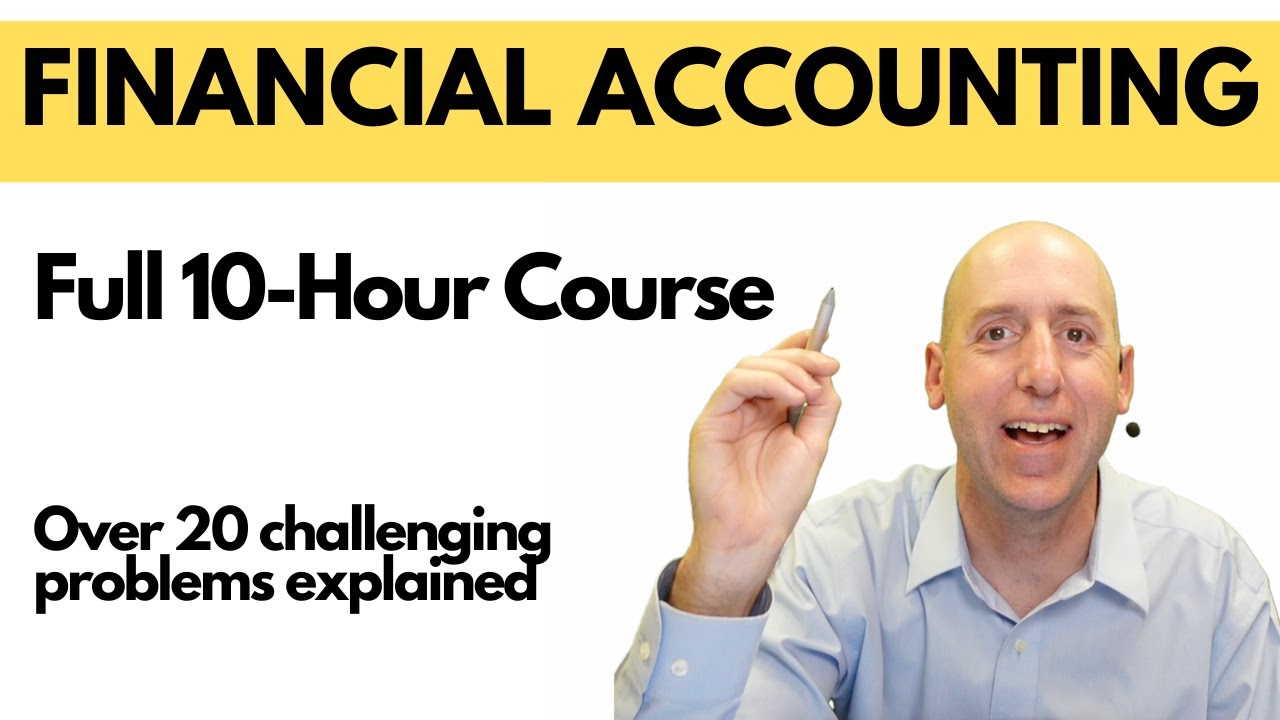
Full Financial Accounting Course in One Video (10 Hours)
Take this course on CourseBond — completely free to start.
Let’s face it: accounting isn’t the flashiest topic. But understanding how money moves through a business is one of the most practical skills you can learn. In 2026, the demand for financial literacy is higher than ever. Whether you’re running a side hustle, managing a department budget, or just trying to make sense of your personal finances, the principles of accounting give you a superpower: the ability to see the story behind the numbers.
Why a “one video” approach? Traditional accounting courses often drag on for weeks, with disconnected lectures that make it hard to see the big picture. A comprehensive, long-form video like the Full Financial Accounting Course in One Video (10 Hours) on CourseBond is the opposite. It’s a streamlined, all-in-one experience. You don’t have to wait for the next module or hunt for missing pieces. You get the entire framework—debits, credits, financial statements, and closing entries—in one sitting (or over a few focused sessions).
In 2026, the world of work is more fluid. Skills like data analysis, budgeting, and financial statement interpretation are no longer just for CPAs. Entrepreneurs need to understand their profit margins. Freelancers need to track income and expenses. Managers need to justify their team’s spend. This course gives you that foundation fast. You’ll move from “what is an asset?” to “I can read a balance sheet and spot a red flag” in a single day of focused learning. That’s the power of a concentrated, no-fluff course.
Who Should Learn Full Financial Accounting in One Video?
This course is designed for anyone who wants to understand the language of business without enrolling in a semester-long university program. Here is exactly who will benefit most:
- Complete Beginners: You have zero accounting knowledge. You don’t know a debit from a credit. That’s perfect. This course starts from the absolute basics and builds up logically. No assumed knowledge, no jargon without explanation.
- Small Business Owners and Entrepreneurs: You’re spending money and earning revenue, but you’re not sure if your numbers are right. You need to understand cash flow, profit, and how to prepare financial statements for your accountant or investors. This course gives you the practical framework.
- Freelancers and Gig Workers: Managing your own taxes and finances can be overwhelming. Learning the accounting cycle will help you track income, expenses, and net worth with confidence. You’ll stop guessing and start knowing.
- Career Changers: You’re considering a move into finance, bookkeeping, or management. A strong grasp of financial accounting is the first step. This course is a fast, efficient way to see if the field clicks for you.
- Students (High School or College): You’re taking an accounting class and struggling, or you want a head start. The full video format is perfect for review, catching up, or getting a holistic view before your semester begins.
- Managers and Non-Finance Professionals: You need to read reports, understand budgets, and communicate with the finance team. This course will give you the confidence to ask the right questions and make better decisions.
If you fall into any of these groups, the Full Financial Accounting Course in One Video (10 Hours) on CourseBond is a perfect fit. It’s built for people who are serious about learning but short on time.
The Best Free Way to Learn Full Financial Accounting in One Video
You don’t need to spend hundreds of dollars on textbooks or expensive certification programs to learn accounting. CourseBond is a free online learning marketplace, and the Full Financial Accounting Course in One Video (10 Hours) is available at no cost. That’s right—a comprehensive, 10-hour video course covering everything from the accounting equation to preparing a post-closing trial balance, completely free.
Why is this the best free way? Because it’s not a collection of random YouTube clips. It’s a structured, sequential course. The instructor walks you through each concept step-by-step, using real-world examples and clear visuals. You won’t get lost in a rabbit hole of unrelated videos. Everything you need is in one place, organized in a logical order.
Compare this to other free options. You might find a great video on journal entries, but then struggle to find a clear explanation of adjusting entries. Or you might find a series that’s five years old and uses outdated terminology. This course is current, comprehensive, and designed for the modern learner. It’s the most efficient path from zero to confident practitioner without spending a dime.
Accessing it is simple. Go to CourseBond, search for the course, and start learning. No subscriptions, no hidden fees. Just a high-quality, 10-hour video that respects your time and your wallet.
Full Financial Accounting in One Video Roadmap: From Beginner to Confident Practitioner
Here is the exact path you will follow inside the Full Financial Accounting Course in One Video (10 Hours) course. Think of this as your learning roadmap.
Step 1: The Accounting Equation and Debits & Credits
You start with the absolute foundation: Assets = Liabilities + Equity. This is the core of everything. The course explains why this equation always balances and how every transaction affects it. Then, you learn the golden rule of debits and credits. The instructor uses a simple, memorable method to help you understand which accounts increase with a debit and which increase with a credit. You’ll practice with basic transactions like buying inventory on credit or receiving cash from a customer.
Step 2: The Accounting Cycle – Journalizing and Posting
Now you put debits and credits to work. You learn how to record transactions in a journal (the book of original entry) using proper format. Then, you post those journal entries to the general ledger. The course shows you the exact process, including how to set up T-accounts and calculate balances. You’ll see how a simple sale flows through the system.
Step 3: The Trial Balance and Adjusting Entries
Once all transactions are posted, you prepare a trial balance. This is a list of all accounts and their balances. The course explains why the trial balance must balance—and what to do if it doesn’t. Then comes the most important part: adjusting entries. You learn about accruals, deferrals, depreciation, and prepaid expenses. The instructor uses clear examples to show why these adjustments are necessary for accurate financial statements. You’ll practice adjusting for supplies used, rent paid in advance, and wages earned but not yet paid.
Step 4: Preparing Financial Statements
With the adjusted trial balance, you are ready to create the three main financial statements. First, the Income Statement (revenue and expenses to find net income). Second, the Statement of Retained Earnings (showing how profits are reinvested). Third, the Balance Sheet (assets, liabilities, and equity at a point in time). The course walks you through each statement line by line, showing exactly where every number comes from.
Step 5: Closing the Books
At the end of the accounting period, you need to close temporary accounts (revenues, expenses, dividends) to permanent accounts (retained earnings). The course explains the closing process step-by-step. You’ll learn how to transfer net income to retained earnings and reset revenue and expense accounts to zero for the new period. Finally, you prepare a post-closing trial balance to ensure everything is ready for the next cycle.
Step 6: Putting It All Together
The course ends with a comprehensive example that ties everything together. You start with a blank set of books, record a series of transactions, make adjustments, prepare statements, and close the books. By the end of this example, you will have completed the entire accounting cycle from start to finish. You’ll be a confident practitioner, ready to apply these skills in the real world.
Common Mistakes Beginners Make
Learning accounting is like learning a new language. You will make mistakes. Here are the most common ones and how to avoid them while taking the Full Financial Accounting Course in One Video (10 Hours).
- Mistake 1: Memorizing instead of understanding. Many beginners try to memorize debit and credit rules. That’s a trap. The course focuses on the logic behind the rules. Focus on the accounting equation. If an asset increases, you debit it. If a liability increases, you credit it. Understand the “why,” and the “what” becomes easy.
- Mistake 2: Skipping the adjusting entries. Adjusting entries are the most confusing part for beginners. But they are also the most important. If you skip them, your financial statements will be wrong. The course spends significant time on this. Watch the adjusting entries section twice if needed. It’s worth it.
- Mistake 3: Not practicing with pen and paper. You can watch a 10-hour video and think you understand. But accounting is a skill. You need to do it. Pause the video and work through the examples yourself. Write down the journal entries. Calculate the balances. The course gives you practice problems—use them.
- Mistake 4: Confusing cash basis and accrual basis. Many beginners think revenue is recorded when cash is received. In accrual accounting (which this course teaches), revenue is recorded when it is earned, not when cash arrives. This is a fundamental shift in thinking. The course explains this clearly. Pay close attention to the difference.
- Mistake 5: Giving up when the trial balance doesn’t balance. It happens to everyone. The course shows you how to find errors. Don’t panic. Check your postings. Check your additions. Look for transposition errors (e.g., writing 54 instead of 45). Persistence is key.
- Mistake 6: Rushing through the closing process. Closing entries seem repetitive, but they are critical. They reset the books for the new period. If you skip or mess up closing, your next period’s beginning balances will be wrong. The course walks you through it slowly. Follow along.
How to Stay Motivated and Finish the Course
A 10-hour video is a commitment. Here is how to make sure you cross the finish line with the Full Financial Accounting Course in One Video (10 Hours) on CourseBond.
- Break it into chunks. Don’t try to watch the entire video in one day. That’s a recipe for burnout. Aim for 1-2 hours per day. At that pace, you’ll finish in a week. Use the video’s chapter markers to plan your sessions.
- Set a specific goal. “I want to understand financial statements” is vague. “I will finish the section on adjusting entries by Wednesday” is specific. Write down your goal for each session. Celebrate when you hit it.
- Create a study space. Find a quiet place where you can focus. Have a notebook, pen, and calculator ready. Treat this like a real class, not background noise. When you sit down, you are there to learn.
- Pause and practice. The instructor will give you examples. Pause the video and try to solve them yourself before watching the solution. This active learning is much more effective than passive watching. It also makes the time go faster.
- Join a community. CourseBond may have discussion features. Use them. Ask questions. Share your progress. Teaching someone else (even just explaining a concept to a friend) is the best way to solidify your own understanding.
- Remember your “why.” Why did you start this course? To start a business? To get a promotion? To manage your money better? Write that reason down and put it next to your computer. When you feel like quitting, read it. Your future self will thank you.
Frequently Asked Questions
Do I need any prior knowledge to take this course?
No. The course is designed for absolute beginners. It starts with the most basic concepts like assets, liabilities, and equity. You only need basic math skills (addition and subtraction) and a willingness to learn. The instructor explains every term and concept clearly.
Is this course really free? Are there any hidden costs?
Yes, it is completely free. CourseBond is a free online learning marketplace. You can access the entire 10-hour video without paying anything. There are no hidden fees, no subscription required, and no upsells within the course. You just need to create a free account on CourseBond to enroll.
How long will it take me to finish the course?
The video itself is 10 hours long. If you watch it straight through, you could finish in a day. However, we recommend taking breaks, pausing to practice, and reviewing tough sections. Most learners complete it in 1-2 weeks by studying 1-2 hours per day.
What will I be able to do after completing this course?
You will be able to understand and perform the complete accounting cycle. You’ll be able to record journal entries, post to ledgers, prepare a trial balance, make adjusting entries, and create an income statement, statement of retained earnings, and balance sheet. You’ll also understand how to close the books. This is the foundation for any further accounting study or for managing your own business finances.
Is this course suitable for someone who wants to become a bookkeeper?
Absolutely. This course covers the core skills every bookkeeper needs: recording transactions, managing ledgers, and preparing financial statements. It is an excellent starting point. After completing this course, you would be ready to learn more about payroll, accounts payable/receivable, and bookkeeping software.
Can I watch this on my phone or tablet?
Yes. CourseBond’s platform is mobile-friendly. You can watch the video on your smartphone, tablet, laptop, or desktop. This makes it easy to learn on the go, whether you’re commuting, on a lunch break, or relaxing at home.
Ready to Start Learning?
You now have the roadmap, the motivation strategies, and the knowledge of what to expect. The only thing left is to take the first step. Financial accounting is a skill that will pay dividends for the rest of your life—whether you’re managing a business, advancing your career, or simply understanding the world around you. The Full Financial Accounting Course in One Video (10 Hours) on CourseBond is the most efficient, free, and beginner-friendly way to gain this skill. No excuses, no delays. Your journey from beginner to confident practitioner starts now.
Enroll in Full Financial Accounting Course in One Video (10 Hours) (free)
