
Why Learn Photoshop for Complete Beginners in 2026?
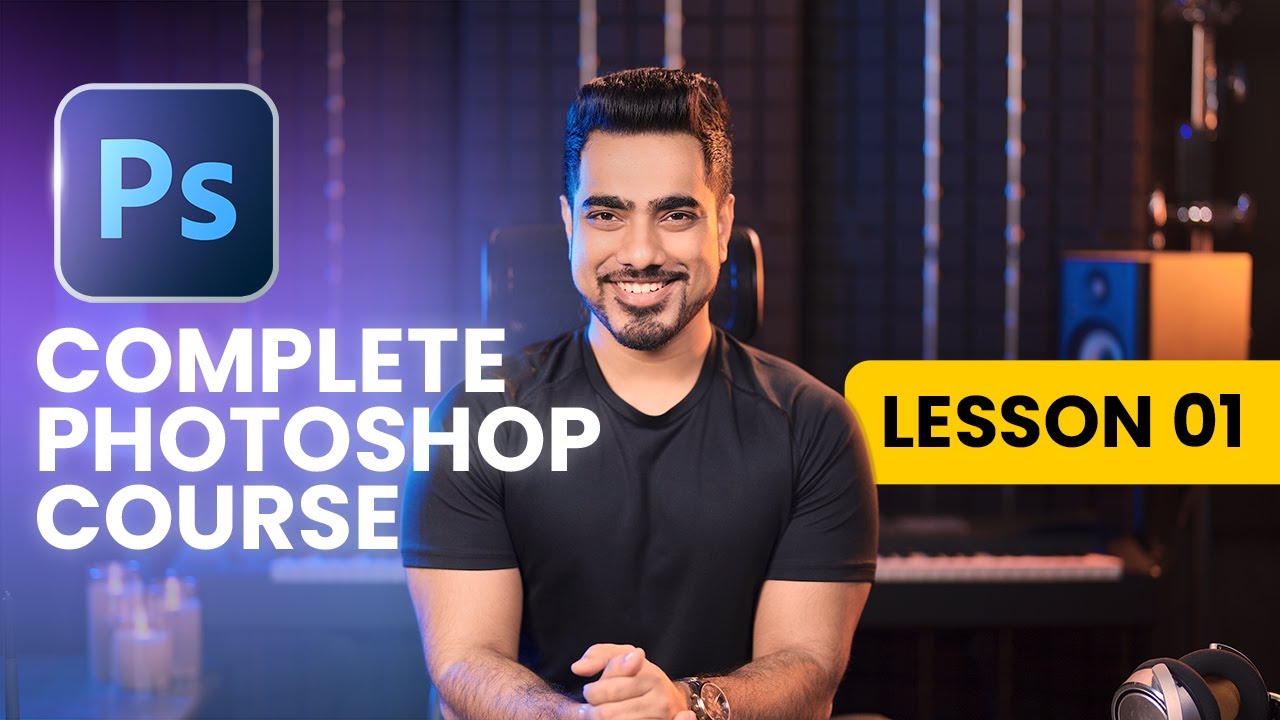
Photoshop for Complete Beginners | Lesson 1
Take this course on CourseBond — completely free to start.
You might think Photoshop is a tool for professional graphic designers and photo editors only. The truth is, knowing how to use Photoshop is becoming a basic life skill, much like knowing how to use a spreadsheet or a word processor. By 2026, visual communication will be even more dominant. Whether you are creating social media graphics for your small business, fixing a family photo, designing a simple flyer, or just expressing your creativity, Photoshop gives you the power to make your ideas look professional.
There is no other software that offers the same level of control over images. While free apps and online tools are great for quick edits, they hit a wall very fast. Photoshop lets you do everything from removing a background to painting digital art. For a complete beginner, learning it now means you will have a skill that is valuable in almost any industry—marketing, real estate, education, e-commerce, and more. The best part? You don’t need to be an artist or a tech expert. You just need to follow a clear, step-by-step path. That is exactly what the Photoshop for Complete Beginners | Lesson 1 course on CourseBond provides.
Who Should Learn Photoshop for Complete Beginners?
This guide is for anyone who has opened Photoshop, felt overwhelmed by the menus and panels, and closed it again. You are not alone. Here are the specific groups of people who will benefit most from starting here:
- Total Newbies: If you have never used any design software before, this is for you. No prior experience is needed.
- Small Business Owners & Freelancers: You need to create your own marketing materials, product images, or social media posts without hiring a designer every time.
- Students and Hobbyists: Whether you are studying graphic design, photography, or just want a creative outlet, Photoshop is the industry standard, and learning it opens doors.
- Career Changers: If you are looking to move into a role that requires basic design skills (like content creation or digital marketing), knowing Photoshop is a huge advantage.
- Anyone who has ever said “I’m not creative”: Creativity is a skill, not a talent. Photoshop gives you the tools to build it.
If you recognize yourself in any of these descriptions, you are in the right place. The Photoshop for Complete Beginners | Lesson 1 course is designed specifically for you.
The Best Free Way to Learn Photoshop for Complete Beginners
Let’s be honest: Photoshop is expensive. The subscription cost can be a barrier for someone who just wants to try it out. That is why the best way to start is with a structured, high-quality, and completely free course. You do not need to pay for a massive online bootcamp or watch random YouTube videos that jump around from topic to topic.
The Photoshop for Complete Beginners | Lesson 1 on CourseBond is the perfect starting point. It is a free online course that treats you like a real beginner. It does not assume you know what a layer is, what a mask does, or how to use the toolbar. It walks you through the absolute basics in a logical order. You can learn at your own pace, pause, rewind, and practice alongside the instructor.
Why is this better than other free resources? Because it is a course, not just a collection of tips. It has a beginning, a middle, and an end. You will build confidence as you complete each module. And because it is on CourseBond, a free learning marketplace, you can access it anytime without worrying about a trial period ending. Start with this single lesson, and you will have a solid foundation to build upon.
Photoshop for Complete Beginners Roadmap: From Beginner to Confident Practitioner
Learning Photoshop is a journey. Here is a practical roadmap that mirrors the structure of a good beginner course. Follow these steps, and you will go from feeling lost to feeling capable.
Step 1: Understand the Interface (The “Where is everything?” phase)
When you first open Photoshop, you see a lot of stuff: the menu bar, the options bar, the toolbar on the left, and multiple panels on the right. Do not try to memorize everything. Your first goal is just to know what the main areas are called. Learn to identify the Tools panel, the Layers panel, the Options bar, and the Document window. That is all you need for now. The Photoshop for Complete Beginners | Lesson 1 course starts exactly here, showing you around without overwhelming you.
Step 2: Master the Essential Tools (The “What does this button do?” phase)
You do not need to learn all 60+ tools. As a beginner, focus on these five:
- Move Tool (V): For moving layers and selections.
- Marquee Tool (M): For making rectangular or circular selections.
- Lasso Tool (L): For making freehand selections.
- Brush Tool (B): For painting and drawing.
- Eraser Tool (E): For removing pixels.
Practice using these tools on a blank document. Draw shapes, erase parts, move things around. This hands-on practice is invaluable.
Step 3: Learn the Magic of Layers (The “Lightbulb moment”)
Layers are the single most important concept in Photoshop. Think of them like a stack of transparent sheets. You can draw on one sheet, add a photo on another, and text on a third. You can move them around, hide them, or change their order without messing up the rest of your work. If you only learn one thing, let it be layers. Once you understand layers, you understand Photoshop. The course dedicates a significant portion to making this concept crystal clear.
Step 4: Make Simple Selections (The “Cutting things out” phase)
Selections are how you tell Photoshop “I only want to edit this part of the image.” Learn how to use the Rectangular Marquee tool, the Elliptical Marquee tool, and the Magic Wand tool. Practice selecting a subject from a background. This skill is used in 90% of Photoshop projects, from creating memes to professional product photography.
Step 5: Work with Text (The “Making posters” phase)
Adding text is easy. Making it look good is a skill. Learn how to use the Type Tool (T). Experiment with the Character panel to change the font, size, color, and spacing. Learn how to warp text or add a drop shadow. This is where you start creating things you can actually share.
Step 6: Basic Color Adjustments (The “Making photos pop” phase)
You do not need to be a color scientist. Learn just three adjustments: Brightness/Contrast, Levels, and Hue/Saturation. These let you fix photos that are too dark, too washed out, or have a weird color cast. Practice on a few of your own photos. You will be amazed at the difference.
Step 7: Save and Export Correctly (The “Finishing the job” phase)
Knowing how to save is just as important as knowing how to edit. Learn the difference between saving a working file (PSD) and exporting a final image (JPEG, PNG, GIF). A PSD file keeps all your layers so you can edit later. A JPEG is for sharing online or printing. A PNG is for images with transparent backgrounds. The course will guide you through the correct export settings for different uses.
Common Mistakes Beginners Make
Every beginner makes mistakes. That is part of learning. But knowing about them beforehand can save you a lot of frustration. Here are the most common ones and how to avoid them.
- Working on the Background layer: The Background layer is locked by default. Beginners often try to paint or erase on it and get confused. Fix: Always create a new layer (Layer > New > Layer) before you start editing. Keep your original image safe.
- Using the Eraser tool instead of a Layer Mask: When you erase something, you delete the pixels forever. If you change your mind, you cannot get them back. A layer mask lets you hide parts of a layer without deleting them. Fix: Learn about layer masks early. They are a beginner’s best friend.
- Ignoring the Layers panel: Beginners often forget to check which layer they are working on. They make changes, but nothing happens because the wrong layer is selected. Fix: Make it a habit to always click on the layer you want to edit in the Layers panel before doing anything else.
- Making images too small: Beginners often resize images down to a tiny size for web use, then later want to print them and find they are blurry. Fix: Always work on a high-resolution file (300 pixels per inch for print, 72 for web). Save a copy for the web, but keep your original high-res file.
- Using too many filters: It is tempting to apply every filter in the menu. This usually makes images look messy and unprofessional. Fix: Use filters with a light touch. A little sharpening or a subtle blur can be great. Too much is a red flag.
- Not saving frequently: Photoshop can crash. Losing an hour of work because you forgot to save is painful. Fix: Get into the habit of pressing Ctrl+S (or Cmd+S on Mac) every few minutes. Also, save a backup PSD file at key stages.
The Photoshop for Complete Beginners | Lesson 1 course addresses these mistakes directly, so you can avoid the common pitfalls from day one.
How to Stay Motivated and Finish the Course
Starting a new skill is exciting. Finishing it is the hard part. Here is how to keep going when the initial excitement fades.
- Set a tiny, daily goal: Do not say “I will learn Photoshop today.” Say “I will watch one 10-minute lesson and practice for 15 minutes.” Small, consistent actions build momentum.
- Follow along, don’t just watch: Have Photoshop open on your computer while you go through the Photoshop for Complete Beginners | Lesson 1 course. Pause the video and do exactly what the instructor does. This turns passive watching into active learning.
- Create a simple project: Pick something you actually want to make. A birthday card for a friend. A profile picture with a cool background. A before-and-after photo of your pet. Having a real goal makes learning purposeful.
- Don’t try to learn everything at once: You do not need to master every tool in the first week. Focus on the basics from the roadmap above. Master those, and you will have a solid foundation. Advanced techniques can come later.
- Join a community: Share your work (even if it is not perfect) with friends or in online forums. Positive feedback is a huge motivator. The CourseBond platform often has community features where you can ask questions.
- Celebrate small wins: Successfully removed a background? Made a text shadow? That is progress. Acknowledge it. Each small win builds your confidence to tackle the next lesson.
Frequently Asked Questions
Do I need any design experience to start this course?
None at all. The Photoshop for Complete Beginners | Lesson 1 course is built for people who have never opened the software before. It starts with the very basics, like how to open a file and what the different panels are called.
Is the course really free? Are there any hidden costs?
Yes, it is completely free. CourseBond is a free online learning marketplace. You can access the full lesson without paying anything. There are no hidden fees or trial periods to worry about.
Do I need to buy Photoshop to follow along?
You will need access to Photoshop to practice. Adobe offers a free 7-day trial on their website, which is perfect for taking this course. You can also check if your school or local library offers free access. The course will teach you how to use the software, but you need the software itself to practice the exercises.
How long will it take me to learn Photoshop as a beginner?
This depends on how much time you dedicate. If you spend 30 minutes a day practicing, you can feel comfortable with the basics in about two to three weeks. The course itself is structured to be completed in a few hours, but real learning happens when you practice the skills on your own projects afterwards.
What if I get stuck or have a question?
That is normal. The best thing to do is to re-watch the specific part of the lesson where you are stuck. Often, you missed a small step. You can also search for the specific problem online (e.g., “how to fix a selection in Photoshop”). Practice and patience are key.
Will this course teach me how to draw or paint in Photoshop?
This specific lesson focuses on the fundamental tools and concepts like layers, selections, and basic editing. While it introduces the Brush tool, it is not a digital painting course. It gives you the foundation you need to eventually move into drawing or advanced photo manipulation in future lessons.
Ready to Start Learning?
You have the roadmap. You know the common mistakes to avoid. You have a plan for staying motivated. The only thing left is to take the first step. Do not wait until you feel “ready.” You will never feel ready until you start. The best time to begin is right now, with a resource that is designed specifically for you.
Open your browser, head over to CourseBond, and start your journey today. No credit card required, no prior experience needed. Just a willingness to learn and a desire to create. Your first project is waiting.
Enroll in Photoshop for Complete Beginners | Lesson 1 (free) and take the first step toward mastering this powerful tool.
