
Why Learn C++ Programming in 2026?
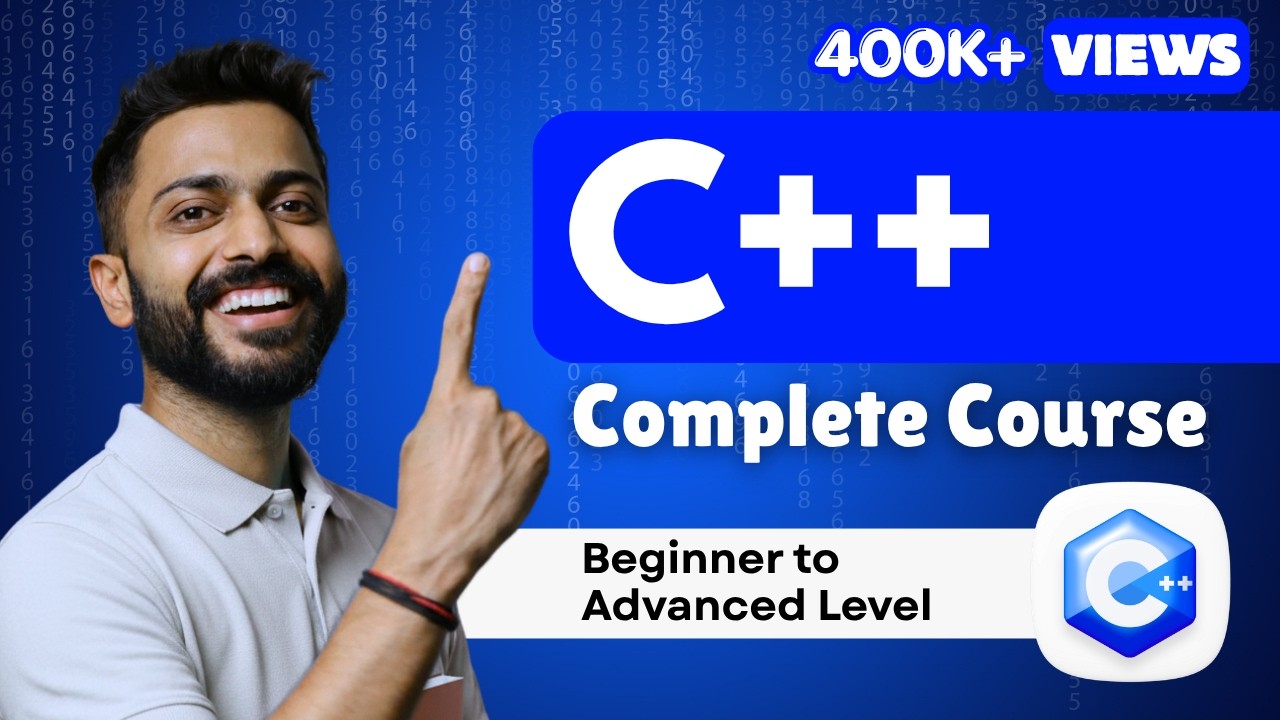
C++ Programming (Complete Course)
Take this course on CourseBond — completely free to start.
You might be wondering, with so many programming languages out there, why bother with C++ in 2026? Isn’t it an “old” language? The truth is, C++ is far from outdated; it’s a foundational powerhouse that continues to evolve and drive some of the most critical technologies we use every day. Learning C++ isn’t just about understanding a language; it’s about understanding how computers fundamentally work, giving you a powerful edge in the programming world.
Performance and Efficiency
One of the biggest reasons C++ remains relevant is its unparalleled performance. When you need a program to run as fast as possible, using minimal resources, C++ is often the go-to choice. This is because C++ gives programmers a high degree of control over hardware and memory management. Think about applications where every millisecond counts: high-frequency trading platforms, real-time simulations, or complex scientific computations. C++ excels in these scenarios.
System Programming and Operating Systems
Ever wondered what makes your operating system tick? Many core components of Windows, macOS, and Linux are written in C++. This includes device drivers, file systems, and even parts of the kernel itself. If you’re interested in understanding the very foundation of computing or want to contribute to system-level development, C++ is an indispensable skill.
Game Development
The gaming industry heavily relies on C++. Major game engines like Unreal Engine are built with C++, and many AAA titles use it for their core logic, graphics rendering, and physics simulations. Its performance capabilities are crucial for creating immersive, high-fidelity gaming experiences. If you dream of creating the next big video game, C++ will be a key language in your toolkit.
Embedded Systems and IoT
From smart home devices to automotive systems, embedded systems are everywhere. These devices often have limited processing power and memory, making C++ an ideal choice due to its efficiency and low-level control. The Internet of Things (IoT) is a rapidly expanding field, and C++ developers are in high demand to program everything from microcontrollers to sophisticated sensor networks.
High-Performance Computing (HPC) and Data Science
When dealing with massive datasets and complex algorithms, speed is paramount. C++ is widely used in scientific computing, numerical analysis, and data processing where performance bottlenecks can severely impact research and development. Libraries and frameworks for data science often have C++ backends to ensure maximum efficiency.
Career Opportunities and Versatility
Knowing C++ opens doors to a wide range of specialized and high-paying roles. Companies like Google, Microsoft, Amazon, and various financial institutions actively seek C++ developers. While other languages might be popular for web development, C++ offers depth and access to areas of computing that those languages simply can’t touch. It demonstrates a strong understanding of computer science fundamentals, which is highly valued by employers.
Ultimately, learning C++ in 2026 isn’t about choosing an old language; it’s about gaining a powerful, versatile skill that underpins much of the modern technological world. It’s a challenging but incredibly rewarding journey that can lead to exciting career paths. If you’re ready to dive in, the C++ Programming (Complete Course) on CourseBond provides a fantastic starting point.
Who Should Learn C++ Programming?
C++ isn’t for everyone, but it’s a game-changer for many. If you’re on the fence about whether C++ is the right language for you, consider these profiles:
Aspiring Game Developers
If your dream is to create video games, especially high-performance 3D games, C++ is almost non-negotiable. Engines like Unreal Engine are built on it, and understanding C++ gives you the power to optimize game logic, graphics, and physics far beyond what scripting languages can offer. It allows you to delve deep into game architecture.
Computer Science Students and Enthusiasts
C++ is often a core language taught in computer science degrees because it beautifully illustrates fundamental concepts like memory management, data structures, and algorithms. If you want a deep understanding of how software interacts with hardware and the underlying principles of computation, C++ is an excellent choice. It builds a solid foundation for learning other languages too.
System Programmers and Operating System Developers
Are you fascinated by how operating systems work? Do you want to write device drivers, build file systems, or contribute to the core of a Linux distribution? C++ is the language of choice for system-level programming, giving you the control needed to interact directly with hardware.
Embedded Systems and IoT Engineers
For those working with microcontrollers, embedded devices, or the rapidly growing Internet of Things (IoT), C++ is invaluable. Its efficiency and ability to run on resource-constrained hardware make it perfect for programming everything from smart sensors to automotive control units.
High-Performance Computing (HPC) and Scientific Developers
If you’re involved in fields requiring intense computation – like scientific simulations, financial modeling, or big data processing – C++’s speed is critical. Researchers and engineers in these areas often turn to C++ to squeeze every bit of performance out of their applications.
Anyone Looking for a Deep Dive into Programming
Even if your ultimate goal isn’t in one of the specific fields above, learning C++ can significantly enhance your programming skills. It forces you to think about memory, performance, and design patterns in a way that higher-level languages often abstract away. This deeper understanding makes you a more capable and versatile programmer, no matter what language you use later.
While C++ has a reputation for being challenging, the rewards are substantial. If any of these descriptions resonate with you, then C++ is definitely worth considering. The journey can be made much smoother with structured learning, like the C++ Programming (Complete Course) available on CourseBond.
The Best Free Way to Learn C++ Programming
Learning C++ doesn’t have to break the bank. In fact, there are excellent free resources available that can guide you from absolute beginner to a confident C++ programmer. The key is to combine structured learning with hands-on practice.
Structured Online Courses
For beginners, a well-structured course is paramount. It provides a clear learning path, breaking down complex topics into manageable chunks. This is where CourseBond shines. The C++ Programming (Complete Course) on CourseBond is designed specifically for beginners. It covers all the fundamentals, from setting up your development environment to understanding advanced concepts like object-oriented programming, all completely free. A good course will include:
- Video Lectures: Visual explanations often make complex ideas easier to grasp.
- Code Examples: Seeing code in action and being able to copy and experiment with it is crucial.
- Quizzes/Exercises: To test your understanding and reinforce learning.
- Project-Based Learning: Applying what you’ve learned to build small projects helps solidify knowledge.
Official Documentation and Reference Sites
While not for absolute beginners, as you progress, familiarizing yourself with C++ documentation is vital. Websites like cppreference.com offer comprehensive guides to the language’s features, standard library functions, and syntax. Think of it as your encyclopedia for C++.
Online Tutorials and Blogs
Many fantastic programmers and educators share their knowledge through free tutorials and blog posts. Websites like learncpp.com are legendary for their thorough, beginner-friendly explanations of C++ concepts. Use these to supplement your main course or to get different perspectives on challenging topics.
YouTube Channels
YouTube hosts a wealth of free C++ tutorials. Channels dedicated to programming often have full series covering C++ from scratch. Search for “C++ tutorial for beginners” to find instructors whose teaching style resonates with you.
Community Forums and Q&A Sites
When you get stuck (and you will!), communities like Stack Overflow and Reddit’s r/cpp_questions are invaluable. You can search for answers to common problems or post your own questions. Engaging with the community not only helps you solve issues but also exposes you to different approaches and best practices.
Practice, Practice, Practice!
Reading and watching alone won’t make you a programmer. You need to write code. Here’s how:
- Follow Along with the Course: As you go through the C++ Programming (Complete Course), type out the code examples yourself, don’t just copy-paste. This builds muscle memory and helps you catch subtle syntax errors.
- Solve Coding Challenges: Websites like LeetCode, HackerRank, and CodeWars offer a plethora of programming challenges, ranging from easy to very difficult. Start with the easy ones to build confidence.
- Build Small Projects: Once you’ve learned the basics, try building simple applications. A calculator, a to-do list, a simple text-based game – these projects help you integrate different concepts.
- Experiment: Don’t be afraid to change code, break it, and then fix it. This is how you truly understand what’s happening.
By combining a structured free course like the one on CourseBond with active practice and leveraging community resources, you can effectively learn C++ programming without spending a dime. It requires dedication, but the resources are there for the taking.
C++ Programming Roadmap: From Beginner to Confident Practitioner
Learning C++ is a journey, and having a clear roadmap can make it much less daunting. Here’s a step-by-step guide to help you progress from absolute beginner to a confident C++ practitioner.
Phase 1: The Absolute Basics (Weeks 1-4)
This phase is all about setting up your environment and understanding the fundamental building blocks of C++. The C++ Programming (Complete Course) will guide you through these initial steps effectively.
- Set up Your Development Environment:
- Install a C++ compiler (like MinGW for Windows, Xcode for macOS, or g++ for Linux).
- Choose an Integrated Development Environment (IDE) like VS Code with C++ extensions, Code::Blocks, or Visual Studio.
- Write your first “Hello, World!” program.
- Basic Syntax and Data Types:
- Understand variables, data types (int, float, char, bool, etc.).
- Learn input/output operations (
cout,cin). - Basic arithmetic, assignment, and comparison operators.
- Control Flow:
- Conditional statements (
if,else if,else,switch). - Loops (
for,while,do-while).
- Conditional statements (
- Functions:
- Define and call functions.
- Understand function parameters and return types.
- Function overloading.
- Arrays:
- Declare and initialize arrays.
- Accessing array elements.
- Basic array manipulations.
- Pointers and References:
- Grasp the concept of memory addresses.
- Declare and use pointers.
- Understand references and their differences from pointers. (This is a crucial and often challenging topic, so take your time!)
Phase 2: Intermediate Concepts and Data Structures (Months 2-4)
Now you’ll dive into more powerful C++ features that make your code more organized, reusable, and efficient.
- Object-Oriented Programming (OOP) Fundamentals:
- Classes and Objects: Define your own data types.
- Encapsulation: Using access specifiers (
public,private,protected). - Constructors and Destructors: Managing object creation and destruction.
- Inheritance: Creating hierarchies of classes.
- Polymorphism: Virtual functions and abstract classes. (Another critical concept that takes time to master.)
- Memory Management:
- Dynamic memory allocation (
new,delete). - Understanding memory leaks and how to avoid them.
- Dynamic memory allocation (
- Standard Template Library (STL):
- Containers: Vectors, lists, maps, sets, queues, stacks. Learn when to use each.
- Algorithms: Sorting, searching, transforming elements.
- Iterators: How to traverse containers.
- File I/O:
- Reading from and writing to files.
Phase 3: Advanced C++ and Practical Application (Months 5-8+)
This phase is about refining your skills, learning advanced features, and applying your knowledge to real-world problems.
- Error Handling:
- Exceptions (
try,catch,throw). - Best practices for error management.
- Exceptions (
- Templates:
- Function templates and class templates for generic programming.
- Smart Pointers:
unique_ptr,shared_ptr,weak_ptr.- Modern C++ approaches to memory management to avoid raw pointer issues.
- Concurrency and Multithreading:
- Introduction to threads, mutexes, and synchronization. (Complex but essential for high-performance applications).
- Build Systems:
- Learn about CMake, Makefiles, or other build tools to manage larger projects.
- Debugging Techniques:
- Become proficient with your IDE’s debugger.
- Practice with Projects:
- Build more complex applications: a small game, a utility tool, a data processing script.
- Contribute to open-source projects (even small bug fixes).
Throughout this roadmap, consistent practice is key. Don’t just read about concepts; implement them. The C++ Programming (Complete Course) on CourseBond will provide the structured lessons you need for each stage, but your own coding efforts will solidify your understanding.
Common Mistakes Beginners Make
Learning C++ can be challenging, and it’s easy to fall into common traps. Being aware of these pitfalls can help you avoid frustration and accelerate your learning.
1. Not Practicing Enough
The Mistake: Just reading or watching tutorials without actively writing code. Programming is a practical skill; you learn by doing, not by observing.
How to Fix It: Type out every code example you encounter. Don’t copy-paste. Then, modify the examples. Try to solve small coding challenges daily. The C++ Programming (Complete Course) includes exercises – make sure to complete them!
2. Getting Overwhelmed by Pointers and Memory Management
The Mistake: Pointers, references, and dynamic memory allocation (new/delete) are unique to C++ compared to many other beginner languages and can feel very abstract. Many beginners get stuck here and give up.
How to Fix It: Understand that this is a common hurdle. Don’t expect to grasp it perfectly overnight. Focus on the core concepts first: what a memory address is, how pointers store addresses, and how to dereference them. Draw diagrams. Practice allocating and deallocating memory for simple data types. Slowly introduce smart pointers (unique_ptr, shared_ptr) as you advance; they simplify memory management significantly.
3. Ignoring Compiler Warnings
The Mistake: Compilers are your best friends. They often give warnings about potential issues that aren’t errors but could lead to bugs or unexpected behavior. Beginners frequently dismiss these warnings.
How to Fix It: Treat warnings as messages from an experienced programmer telling you to be careful. Always read and understand compiler warnings. Configure your compiler to treat warnings as errors (e.g., using -Werror with g++) once you’re comfortable, forcing you to write cleaner, safer code.
4. Not Using a Debugger
The Mistake: Relying solely on cout statements to find bugs. While useful for simple checks, this approach is inefficient and often inadequate for complex issues.
How to Fix It: Learn to use your IDE’s debugger. Set breakpoints, step through your code line by line, inspect variable values, and observe the program’s flow. A debugger is an indispensable tool for understanding why your code isn’t working as expected.
5. Trying to Learn Everything at Once
The Mistake: C++ is a vast language. Trying to master
